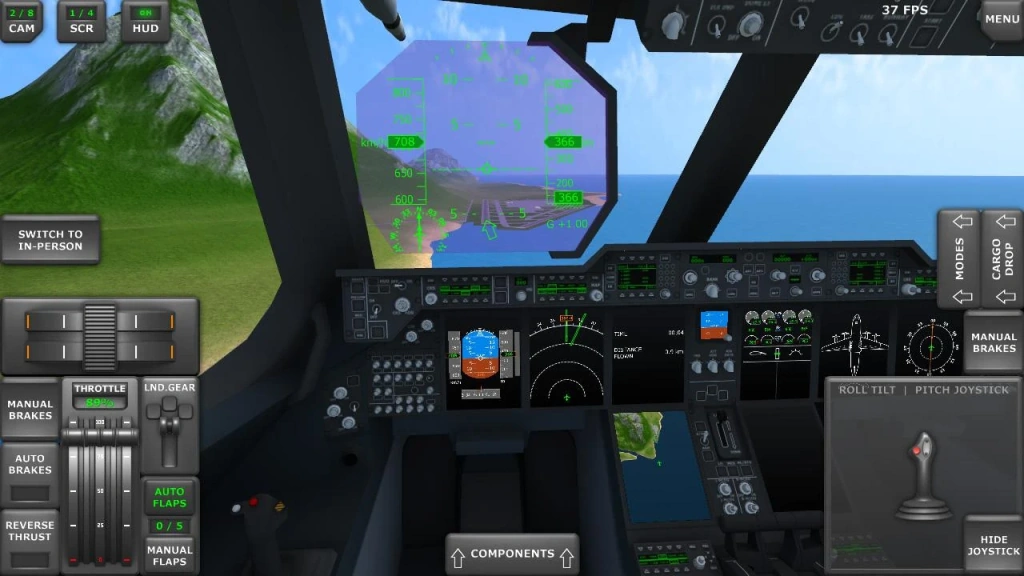
You get to pilot a variety of modern turboprop planes and drive ground vehicles in Turboprop Flight Simulator, a 3D aviation simulator game. Both commercial and military aircraft are available for your flight.
Training missions are a great way to learn the ropes of flying, including how to taxi, take off, and land. Finish a wide variety of missions.
In first-person mode, you can explore the plane’s inside (in most levels and while flying freely). Deal with a variety of objects, including doors, a cargo ramp, strobe lights, and main lights. Operate cars on solid ground.
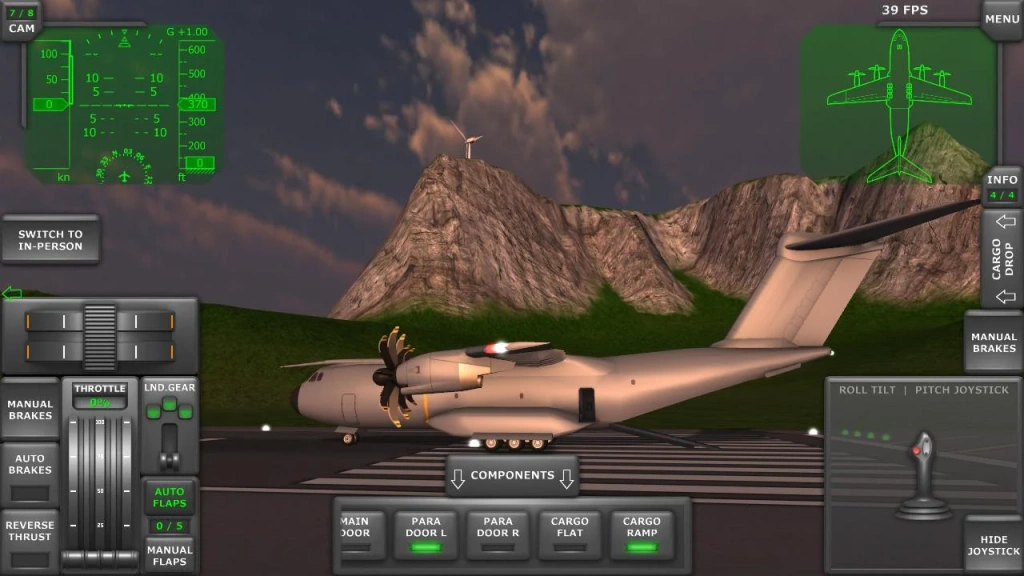
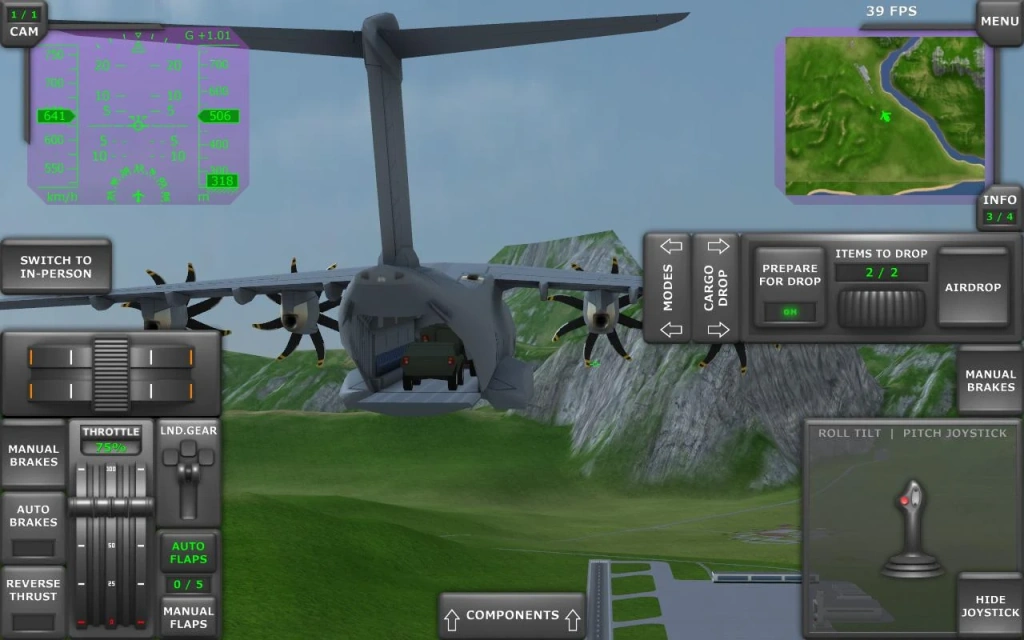
Utilize the cargo planes for loading, unloading, and airdropping cars and supplies. Use makeshift runways and airports for takeoff and landing. For takeoff and landing, you can use JATO/L (Jet Assisted Take-Off and Landing).
Fly around at will in free-flight mode or plot your own paths on the ground. Soar through different times of the day.
Aircraft list:
– C-400 tactical airlifter – inspired from the real-world Airbus A400M.
– HC-400 coastguard search and rescue – variant of C-400.
– MC-400 special operations – variant of C-400.
– RL-42 regional airliner – inspired from the real-world ATR-42.
– RL-72 regional airliner – inspired from the real-world ATR-72.
– E-42 military early warning aircraft – derived from RL-42.
– XV-40 concept tilt-wing VTOL cargo.
– PV-40 private luxury VTOL – variant of XV-40.
– MV-40 special operations VTOL – variant of XV-40.
– PS-26 concept private seaplane.
– MS-26 special operations seaplane – variant of PS-26.
– C-130 military cargo – inspired from the legendary Lockheed C-130 Hercules.
– HC-130 coastguard search and rescue – variant of C-130.
– MC-130 special operations – variant of C-130.
Features:
– The 3D visuals are top-notch, featuring intricate cockpits for each aircraft.
– In-depth physics modeling for virtual aircraft.
– Full control scheme (containing all landing gear, rudder, flaps, spoilers, thrust reversers, and auto-brakes).
– A variety of controls are available, such as a stick/yoke combination and a mixed tilt sensor.
– A plethora of cameras, including those with the pilot and copilot seated in the cockpit.
– Very similar to the noises made by actual aviation engines, such as turbines and propellers.
– Damage to or destruction of an aircraft, including but not limited to wingtip clips, wing separation, tail separation, and main fuselage breakage.
– Airfields spread out across multiple islands.
– Deciding on a system of measurement for distance, flying height, and air speed (metric, aviation standard, or imperial).